Showing posts with label Travel Tips. Show all posts

June 10, 2011

What And How To Pack For A Safe Holiday

Safety begins when you pack.  To help avoid becoming a target, do not dress so as to mark yourself as an affluent tourist.  Expensive-looking jewelry, for instance, can draw the wrong attention.

Always try to travel light.  You can move more quickly and will be more likely to have a free hand.  You will also be less tired and less likely to set your luggage down, leaving it unattended.

Carry the minimum number of valuables, and plan places to conceal them.  Your passport, cash and credit cards are most secure when locked in a hotel safe.  When you have to carry them on your person, you may wish to put them in various places rather than all in one wallet or pouch.  Avoid handbags, fanny packs and outside pockets that are easy targets for thieves.  Inside pockets and a sturdy shoulder bag with the strap worn across your chest are somewhat safer.  One of the safest places to carry valuables is in a pouch or money belt worn under your clothing.

If you wear glasses, pack an extra pair.  Bring them and any medicines you need in your carry-on luggage.

To avoid problems when passing through customs, keep medicines in their original, labeled containers.  Bring copies of your prescriptions and the generic names for the drugs.  If a medication is unusual or contains narcotics, carry a letter from your doctor attesting to your need to take the drug.  If you have any doubt about the legality of carrying a certain drug into a country, consult the embassy or consulate of that country before you travel.

Bring travelers checks and one or two major credit or debit cards instead of cash. Debit cards are much preferred over credit cards.

Pack an extra set of passport photos along with a photocopy of your passport’s information page to make replacement of your passport easier in the event it is lost or stolen.

Put your name, address and telephone numbers inside and outside of each piece of luggage.  Use covered luggage tags to avoid casual observation of your identity or nationality.  If possible, lock your luggage.

Consider getting a telephone calling card.  It is a convenient way of keeping in touch.  If you have one, verify that you can use it from your overseas location(s).  Access numbers to U.S.  operators are published in many international newspapers.  Find out your access number before you go.  If you have an unlocked, tri-band or quad-band GSM phone, you will be able to buy a SIM card and use it locally.  This will be much cheaper than using your home service and international rates or roaming fees.

Check with the TSA web site to see what the latest rules and regulations are for carry-on baggage.

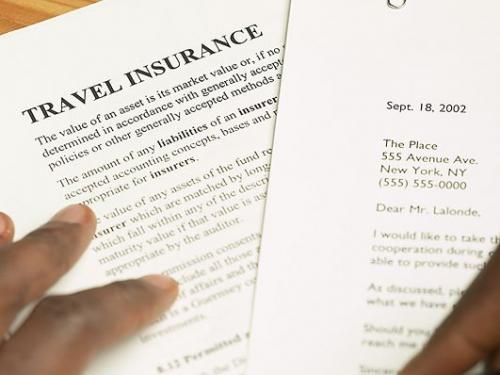
Vacation Travel Insurance Tips

Travel insurance is an important but often overlooked part of your vacation. Whether you are traveling to a foreign country or to the next state you should consider travel insurance.

 Some of the reasons to have insurance are to cover medical expenses, life insurance for your family, or trip insurance when something goes wrong.

If you have medical coverage, check with your insurer to find out the specifics regarding your planned destination.

You can buy medical coverage for the duration of your trip or for longer periods. Some travel insurance policies cover multiple trips of specific duration. Some will cover you for travel up to a year.

Planning a skiing or mountain climbing vacation? You may want to consider evacuation insurance. If you need to be rescued it is quite possible that the you will end up with a hefty bill to pay for the service.

If you are going on a cruise, taking an organized tour or just flying on an airplane you may want trip cancellation insurance. You or a family member may get sick at the last minute or your plans may change unexpectedly.

Many companies do not offer refunds and you could be out thousands of dollars. There are many things out of your control that can mess with your plans. Refunds are tough to get sometimes.

Other popular coverage is loss of baggage, baggage delay, travel delay, dental, 24 Hour Traveler Assistance, and accidental death.

If you are driving out of the country definitely check with your auto insurer. Purchase any extra coverage needed. You may want to ask about an international roadside assistance policy.

Auto breakdowns and accidents are bad enough at home but the problems are compounded abroad.

Check with your credit card company. You may have some coverage if you purchase your vacation with their card.

If you are traveling with a group you may be able to get coverage cheaper as a group rather than individually.

Sometimes you will pay more for less coverage if you buy it through a travel agent who makes a nice commission. This is not always the case but it's your money. Shop around for the best deal.

7 Killer Ways To Beat Jet Lag

When you’re headed out on a vacation or business trip the last thing you need is to feel tired or run down. But with these seven tips to beat jet lag, you’re sure to stay alert and ready for your entire trip.

Keep it the same

When you’re not traveling for long, you can usually avoid jet lag by sticking to your normal routine. Keep your watch set to your ‘home’ time and just do what you’d normally do at home—eating, sleeping, exercise, etc.

Your body won’t even notice the time chance when you do this, and it will readjust without any problems on the way back.

Sleep like a baby

When you’re traveling out of your normal time zone, you’ll want to try to keep to normal bedtimes. And while you might have troubles at first, try to get the same number of hours of sleep per night. This will help your body fall into a new rhythm for the time when you’re away.

Even if you can’t fall asleep right away, try to get into bed and close your eyes until you fall asleep. Eventually your body will pick up the clue and you’ll get all the sleep that you need.

Fill yourself up

Many times jet lag can be made worse by becoming dehydrated on your trip or while you’re headed there on the plane. To combat this you’ll want to make sure that you’re drinking plenty of fluids as you travel—water and juices especially.

Alcohol can dehydrate the body so it should be avoided if you can. And if you’re expected to drink at a business function, just follow each glass with a chaser of water.

Find the rhythm

When you’re headed into areas where the time will change significantly, you want to set your watch when you get there and start following the local hours. You’ll want to eat when you are supposed to eat, sleep when it’s dark, etc.

By changing the routine that you’re used to directly into the new hours, you can help to offset jet lag before it even starts. Follow your new daylight and darkness hours to adjust your circadian rhythms.

When you arrive

One of the best ways to avoid jet lag is to do some form of exercise when you arrive at your destination. This can be as simple as a walk or a few calisthenics in your hotel room. Do a few jumping jacks to get your heart pumping or start touring the town.

When your body gets exercise, it can ‘bank’ the extra energy and help you adapt to changing light conditions.

If you just can’t sleep

When all else fails, you can try a sleeping pill to re-teach your body when to sleep. Normally this isn’t recommended, but when you’re on an extended trip or you have to switch time zones frequently, a sleeping pill can help to give you some rest in order to be alert during the day.

Natural cues

And if the sleeping pill doesn’t appeal to you, you can try aromatherapy.

Find a good travel kits that includes oils that you can smell for energy as well as soothing oils for relaxation, like lavender.

With all of these tips, jet lag will no longer follow you on your next trip.

June 9, 2011

Why You Should Stay At A Pattaya Guest House

If you are planning a trip to Pattaya, Thailand, you will eventually have to figure out where you will be spending your nights.  You have many choices.

First you will need to decide what part of Pattaya you want to stay at.  Basically, your choices are North, South, and Central.  Granted you can also stay on Soi Buakhao or nearer to Third Road, but it is still in one of the three areas.

Once you have figured out the area you want to spend your holiday at, you will need to choose a hotel or guest house.  Depending on your budget, you may want to investigate some of the guest houses in Pattaya.

I have stayed at 5-star hotels, lesser starred places, rooms above bars and a couple of different guest houses.  While 5-star hotels are nice, I prefer the quaint, mom & pop run guest houses.

I prefer to stay in Central Pattaya but I don’t need to be close to the bay.  I can be a block or two off the main drag and still enjoy myself.  My personal preference is Soi LK Metro near Soi Diana Inn and Soi Buakhao.

This is an "L" shaped, small street, with about 15 guest houses on it.  Most of them have a small bar downstairs and 4 to 20 rooms upstairs.

I prefer them because of the service.  The location is good enough.  But to actually know the owners, call them by name, have a beer or two with them, and get super service is what I am looking for on vacation.

My favorite over the past couple of years has been a small guest house called Place2Bee.  It has all of 6 rooms and is run by a very friendly Brit and his Thai wife.

I found by accident.  I was trying to book a room at a place on the same street but they were full up and the owner offered to find me a room.  I eagerly took him up on his offer and he steered me to the Place2Bee.  I hit it off with the owner, John, immediately.

We would chat over coffee in the morning and a beer in the afternoon.  He was full of stories and would always bring me up to speed on the latest news and gossip of Pattaya whenever I visited.  I recommended his place to many friends.

However, John sold the Place2Bee, so I can no longer recommend it.  I will still recommend the guest houses in the same area and will be on the lookout for another that compares with the Place2Bee.

So, you can see why I prefer the smaller, quaint, guest house over a hotel.  The service is better, the owners friendlier, and there is a lot less hassle.  Check one out on your next holiday in Pattaya.

What Is A Duty-Free Exemption?

 The duty-free exemption, also called the personal exemption, is the total value of merchandise you may bring back to the United States without having to pay duty. You may bring back more than your exemption, but you will have to pay duty on it. In most cases, the personal exemption is $800, but there are some exceptions to this rule, which are explained below.

Exemptions

Depending on the countries you have visited, your personal exemption will be $200, $800, or $1,600. There are limits on the amount of alcoholic beverages, cigarettes, cigars, and other tobacco products you may include in your duty-free personal exemption. The differences are explained in the following section.

The duty-free exemptions ($200, $800, or $1,600) apply if:

The items are for your personal or household use or intended to be given as gifts.
They are in your possession, that is, they accompany you when you return to the United States. Items to be sent later may not be included in your $800 duty-free exemption. (Exceptions apply for goods sent from Guam or the U.S. Virgin Islands.)
They are declared to Customs and Border Protection (CBP). If you do not declare something that should have been declared, you risk forfeiting it. If in doubt, declare it.
You are returning from an overseas stay of at least 48 hours. For example, if you leave the United States at 1:30 p.m. on June 1, you would complete the 48-hour period at 1:30 p.m. on June 3. This time limit does not apply if you are returning from Mexico or from the U.S. Virgin Islands.
You have not used all of your exemption allowance, or used any part of it, in the past 30 days—for example, if you go to England and bring back $150 worth of items—you must wait another 30 days before you are allowed another $800 exemption.
The items are not prohibited or restricted as discussed in the section on Prohibited and Restricted Items. Note the embargo prohibitions on products of Cuba.
Joint Declaration

Family members who live in the same home and return together to the United States may combine their personal exemptions. This is called a joint declaration. For example, if Mr. and Mrs. Smith travel overseas and Mrs. Smith brings home a $1,000 piece of glassware, and Mr. Smith buys $600 worth of clothing, they can combine their individual $800 exemptions on a joint declaration and not have to pay duty.

Children and infants are allowed the same exemption as adults, except for alcoholic beverages and tobacco products.

Types of Exemptions
$200 Exemption
If you cannot claim other exemptions because:

you have been out of the country more than once in a 30-day period or because
you have not been out of the country for at least 48 hours,
you may still bring back $200 worth of items free of duty and tax. As discussed earlier, these items must be for your personal or household use.

If you bring back more than $200 worth of dutiable items, or if any item is subject to duty or tax, the entire amount will be dutiable. For instance, you were out of the country for 36 hours and came back with a $300 piece of pottery. You could not deduct $200 from its value and pay duty on $100. The pottery would be dutiable for the full value of $300.
You may include with the $200 exemption your choice of the following: 50 cigarettes and 10 cigars and 150 milliliters (5 fl. oz.) of alcoholic beverages or 150 milliliters (5 fl. oz.) of perfume containing alcohol.

Note that unlike other exemptions, family members may not combine their individual $200 exemptions. Thus, if Mr. and Mrs. Smith spend a night in Canada, each may bring back up to $200 worth of goods, but they would not be allowed a collective family exemption of $400.

Also, duty on items you mail home to yourself will be waived if the value is $200 or less.

$800 Exemption

If you are arriving from anywhere other than a U.S. insular possession (U.S. Virgin Islands, American Samoa, or Guam) you may bring back $800 worth of items duty free, as long as you bring them with you. This is called accompanied baggage.

For Caribbean Basin or Andean countries, your exemption is also $800.

You may include two liters of alcoholic beverages with this $800 exemption, as long as one of the liters was produced in one of the countries listed above.


Depending on what items you’re bringing back from your trip, you could come home with more than $800 worth of gifts or purchases and still not be charged duty. For instance, say you received a $700 bracelet as a gift, and you bought a $40 hat and a $60 color print. Because these items total $800, you would not be charged duty, since you have not exceeded your duty-free exemption. If you had also bought a $500 painting on that trip, you could bring all $1300 worth of merchandise home without having to pay duty, because fine art is duty-free.

$1,600 Exemption

If you return directly or indirectly from a U.S. insular possession (U.S. Virgin Islands, American Samoa, or Guam), you are allowed a $1,600 duty-free exemption.

If you travel to a U.S. insular possession and to one or more of the Caribbean Basin or Andean countries listed above, let’s say on a Caribbean cruise, you may bring back $1,600 worth of items without paying duty, but only $800 worth of these items may come from the Caribbean Basin or Andean country(ies). Any amount beyond $800 will be dutiable unless you acquired it in one of the insular possessions. For example, if you were to travel to the U.S. Virgin Islands and Jamaica, you would be allowed to bring back $1,600 worth of merchandise duty free, as long as only $800 worth was acquired in Jamaica.

Also, you may include 1,000 cigarettes as part of the $1600 exemption, but at least 800 of them must have been acquired in an insular possession. Only 200 cigarettes may have been acquired elsewhere. For example, if you were touring the South Pacific and you stopped in Tahiti, American Samoa, and other ports of call, you could bring back five cartons of cigarettes, but four of them would have to have been bought in American Samoa.

Similarly, you may include five liters of alcoholic beverages in your duty-free exemption, but one of them must be a product of an insular possession. Four may be products of other countries.

 
Design by Free WordPress Themes | Bloggerized by Lasantha - Premium Blogger Themes